
Trauma + Anxiety Therapist for First Responders & Families in Peoria, AZ
Natalie Arbizu, MSE, LAC
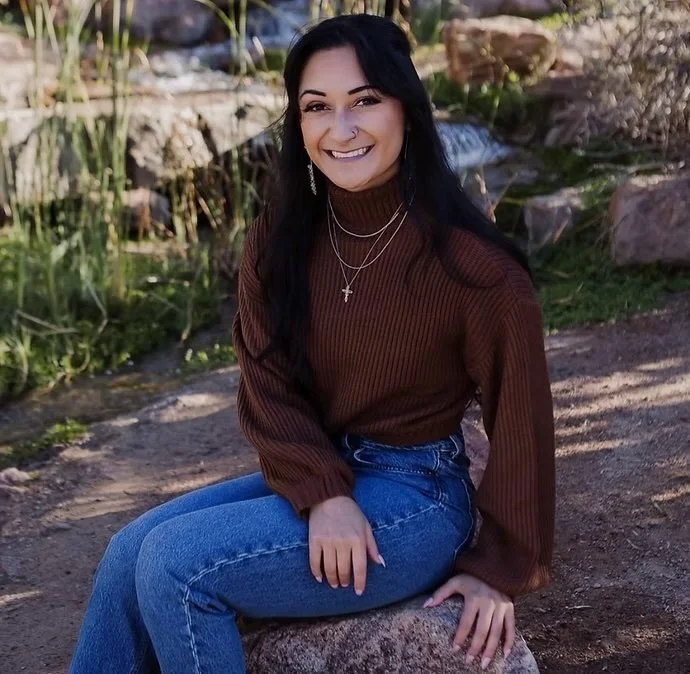
Serving Adults, Teens & Children
Maybe you grew up watching a parent show up for everyone else's emergencies, and learned early that strength meant not needing help yourself. Maybe you've been through things that most people around you don't know about, and you've kept moving because stopping felt impossible.
Maybe you're ready to finally do something different.
I became a therapist because I understand what it means to carry things quietly. I've been on the other side of that experience, and it's part of why I show up the way I do.
*
Therapy for adults, teens, + children
* Therapy for adults, teens, + children
What is it like to start therapy for the first time?

Starting therapy for the first time or after a long gap, can bring up a lot. Uncertainty about what to say, worry about being judged, not knowing if it will actually help. I want to name that, because it's real, and because my job is to make that first step feel worth taking.
Your first session with me is a conversation. Nothing is expected of you except showing up. We move at your pace, toward goals that are yours, not mine.
EMDR therapy for teens, children + adults in Peoria, AZ
I work with children (10+), teens, and adults who are ready to take a next step, whether that's starting therapy for the first time or returning after a break. I bring particular understanding to clients whose lives have been shaped by first responder family dynamics, athletic environments, or the kind of quiet resilience that comes from surviving difficult experiences.
My clients often include:
Teens and children (10+) navigating anxiety, trauma, or high-stress households — including EMDR adapted for adolescent nervous systems
Adults processing trauma, depression, or life transitions that feel bigger than expected
First responders and their families. People who understand the culture of service, stoicism, and the emotional weight that can come with it
Young adults reckoning with identity, direction, and purpose after a major chapter closes
People beginning therapy for the first time who need a space that feels safe, supportive, and not intimidating
"Everyone's story is different — the experiences we've been through and the emotions we carry shape us in deeply personal ways. My role is to help you recognize your capacity for growth and move toward a life that feels more possible."
— Natalie Arbizu, MA, LAC
How first responder family dynamics shape mental health
Growing up with a first responder parent (or being one yourself) leaves a particular kind of imprint. You learn early that emotions come second, that staying calm is a skill, and that asking for help can feel like weakness even when it isn't.
I understand that culture from the inside, not just from a textbook. My own family background includes both first responder and military service, and that experience informs how I approach this work.
My goal is to create a space where that culture is respected, not minimized or pathologized, while still making room for what may have been quietly building underneath.
Trauma-informed therapy that meets you where you are
My clients are often people who have carried a lot and expected little in return. What they need isn't someone who claims to have all the answers. They need someone who will stay genuinely curious, ask the right questions, and not flinch at what comes up.
That's the space I aim to create.
As a Licensed Associate Counselor (LAC), I continue to collaborate closely with my clinical team at Inside Out to ensure clients receive thoughtful, trauma-informed care. My goal is always the same: helping you feel supported while we work through what matters most to you.
Working with me also means access to high-quality care at a more accessible rate, helping make trauma-informed therapy available to more people who need it.
You do not have to have it figured out before you come in. Natalie works at the pace that is right for you...
Specialties: trauma, attachment wounds, grief + first responders
-

Trauma + PTSD
Natalie works with trauma across the lifespan — from children navigating what happened before they had words for it, to adults whose nervous systems are still responding to something that ended years ago.
-

Attachment Wounds + Relationship Strain
The patterns that formed in early relationships and are still shaping how you connect (or do not connect) with the people around you. Natalie brings EMDR and relational attunement to this work.
-

Grief, Loss + Life Transitions
Loss looks different at different ages and in different lives. Natalie works with children, teens, and adults navigating grief, including the kind that does not have a clear name or a recognized timeline.
-
First Responders + Helping Professionals
Natalie understands the culture that comes with helping professions: the expectation to manage, the difficulty of asking for help, the weight of what accumulates over years of high-exposure work. This page is for you.
My work spans each of these areas, and in most cases, they're connected. Trauma doesn't stay in one lane, and neither does healing.
Trauma therapy training + qualifications
I hold a Bachelor of Science in Psychology from Wayne State College in Nebraska, where I also played four years of collegiate softball, an experience that continues to shape how I understand resilience, discipline, and perseverance.
I also hold a Master of Science in Education (MSE) in Clinical Mental Health Counseling with a specialization in addictions, bringing an integrative perspective to how I understand trauma, coping, and behavioral patterns.
Born and raised in Arizona, I bring both local roots and extensive childcare experience working with children ages infancy through 14.
My personal connection to first responder and military family life deeply informs how I support clients navigating similar dynamics.

A little more about me
When I'm not in session, I'm usually outside moving — working out, running, or finding an excuse to be outdoors. I love spending time with my family, playing with my German Shepherd, and staying active whenever I can.
My faith and family keep me grounded, and my background as a collegiate athlete continues to shape how I approach both life and this work. I believe the hardest moments often hold the most potential for growth, a mindset I bring with me into the therapy room.
Further reading
ANXIETY + NERVOUS SYSTEM
You Are Not Too Sensitive. Your Nervous System Learned to Stay Ready.
Anxiety that never fully quiets. Reactions that come faster than you can catch them. Here is what the nervous system is actually doing — and what helps when understanding it has not been enough.
CHILDREN’S THERAPY
When Your Child Won't Talk About What's Bothering Them
Your child is clearly struggling, but when you ask about it you get a shrug or nothing at all. This is not defiance. Here is what it is communicating — and what play therapy can do that conversation cannot.
MENTAL HEALTH + CULTURE
First Responders Do Not Burn Out. They Adapt. And That Is the Problem.
Burnout is the wrong word for what happens to first responders over a career of high-exposure work. Cumulative trauma is more accurate — and the distinction matters because the interventions are different.


Ready to take the next step?
You've already done something brave by being here. If anything on this page resonated, I'd love to connect. Reach out and let's figure out if we're a good fit — no pressure, just a conversation.
Common Questions About Working With Me
-
Trauma-informed therapy means I understand that behavior makes sense when you understand what it's responding to. Rather than labeling symptoms as problems to fix, I look for what those symptoms have been protecting — and we work from there. Learn more at EMDRIA.org.
-
Yes — I work with children ages 10+), teens, and adults. I bring three years of direct childcare experience into my work with younger clients, which gives me a grounded, natural way of connecting that doesn't feel forced or clinical.
-
It's an area I understand personally and clinically. I grew up with a first responder parent and I know what that culture asks of the people inside it — and the families around them. It's not a specialty I arrived at through a textbook.
-
That's the most normal thing in the world. I became a therapist in part because I know what that uncertainty feels like. Your first session is just a conversation — nothing is expected of you except showing up.