

Animal-Assisted Therapy in Peoria, AZ
In-Person Sessions | Peoria, Arizona | Available with Christina Behrens, LPC
There are moments in therapy when the words stop. Not because there is nothing to say, but because the nervous system is too activated to access language, or the experience being processed is one that never had words attached to it in the first place.
Animal-assisted therapy creates a different kind of entry point. One that does not require the client to start talking before they are ready, and that works at the level of the nervous system rather than the level of conversation.
It is not a softer version of therapy. It is a clinically grounded approach with a growing research base, particularly for anxiety, trauma, and work with children and adolescents. And at Inside Out, it is integrated intentionally into the therapeutic process, not offered as an add-on or an amenity.
What animal-assisted therapy is
Animal-assisted therapy (AAT) is a structured, goal-directed approach in which a trained animal is incorporated into the therapeutic process by a credentialed clinician. It is a specific clinical modality, distinct from emotional support animals and from informal animal-assisted activities. The American Veterinary Medical Association defines animal-assisted therapy as an intervention with defined goals, delivered by a health professional with relevant expertise, in which a trained animal is an integral part of the treatment.
The key word is integral. The animal is not decorating the room or making it feel warmer, though both of those things may happen. The animal is part of how the clinical work gets done.
In practice, this means the animal responds to what is happening in the session in real time, provides immediate physiological grounding that is difficult to achieve through verbal means alone, and lowers the threshold for engagement in ways that are particularly significant for clients who have difficulty accessing the therapeutic relationship directly.
What the research shows
The evidence base for animal-assisted therapy has grown substantially over the past two decades. The Human Animal Bond Research Institute documents research across a range of clinical applications, with particular strength in anxiety, trauma, and pediatric populations. Key findings include:
Physical contact with a trained animal measurably reduces cortisol, the primary stress hormone, often within minutes of initial contact
Animal presence activates the parasympathetic nervous system, shifting the body out of threat response and creating conditions more conducive to therapeutic processing
For clients with trauma histories or attachment wounds, the non-judgmental, non-demanding presence of an animal can lower the relational barrier and make engagement in the therapeutic relationship more accessible
Children in therapeutic settings show increased willingness to engage and decreased physiological anxiety when a trained animal is present
Animal-assisted approaches have demonstrated effectiveness as an adjunct to trauma treatment, including EMDR, by supporting nervous system regulation during processing
These effects are physiological. They are measurable. And they create real clinical opportunity that is difficult to replicate through other means.
"Research consistently demonstrates that human-animal interaction activates neurobiological systems associated with social bonding, stress reduction, and emotional regulation, creating measurable physiological changes that support therapeutic outcomes."
Human Animal Bond Research Institute (HABRI)
Who benefits most from animal-assisted therapy

Animal-assisted therapy is not for everyone, and it does not need to be. It is particularly well-suited for:
Clients whose anxiety or trauma responses make verbal engagement difficult to access, especially early in treatment
People who benefit from immediate, embodied co-regulation rather than primarily cognitive approaches
Clients with attachment wounds or significant interpersonal trauma, for whom the non-evaluative presence of an animal provides a relational experience that is distinct from the human therapeutic relationship
Children and adolescents who are nervous about therapy or who engage more readily in a non-clinical environment
Anyone who finds that traditional talk-based approaches leave them feeling like they are performing “okayness” rather than actually processing anything
It also integrates particularly well with EMDR, where nervous system regulation is a prerequisite for processing. Having an animal present during preparation and stabilization phases can support the client in reaching and maintaining the regulated state the work requires.
At Inside Out Therapy + Consulting, animal-assisted therapy is offered through a specific and unusual resource: a trained Great Dane service dog named Liberty, who works alongside Christina Behrens, LPC.
Liberty is not an emotional support animal. She is a service dog in training, with specific behavioral training designed for a clinical therapeutic environment. She detects physiological changes associated with anxiety, stress, and panic, and responds with trained behaviors intended to support nervous system regulation.
What makes her clinically significant is not just her presence in the room. It is that she responds before the client has had to ask for anything, and often before the client has consciously registered what is shifting in themselves. For clients who are used to managing their distress alone and in silence, that experience is notable.
Animal-assisted therapy at Inside Out
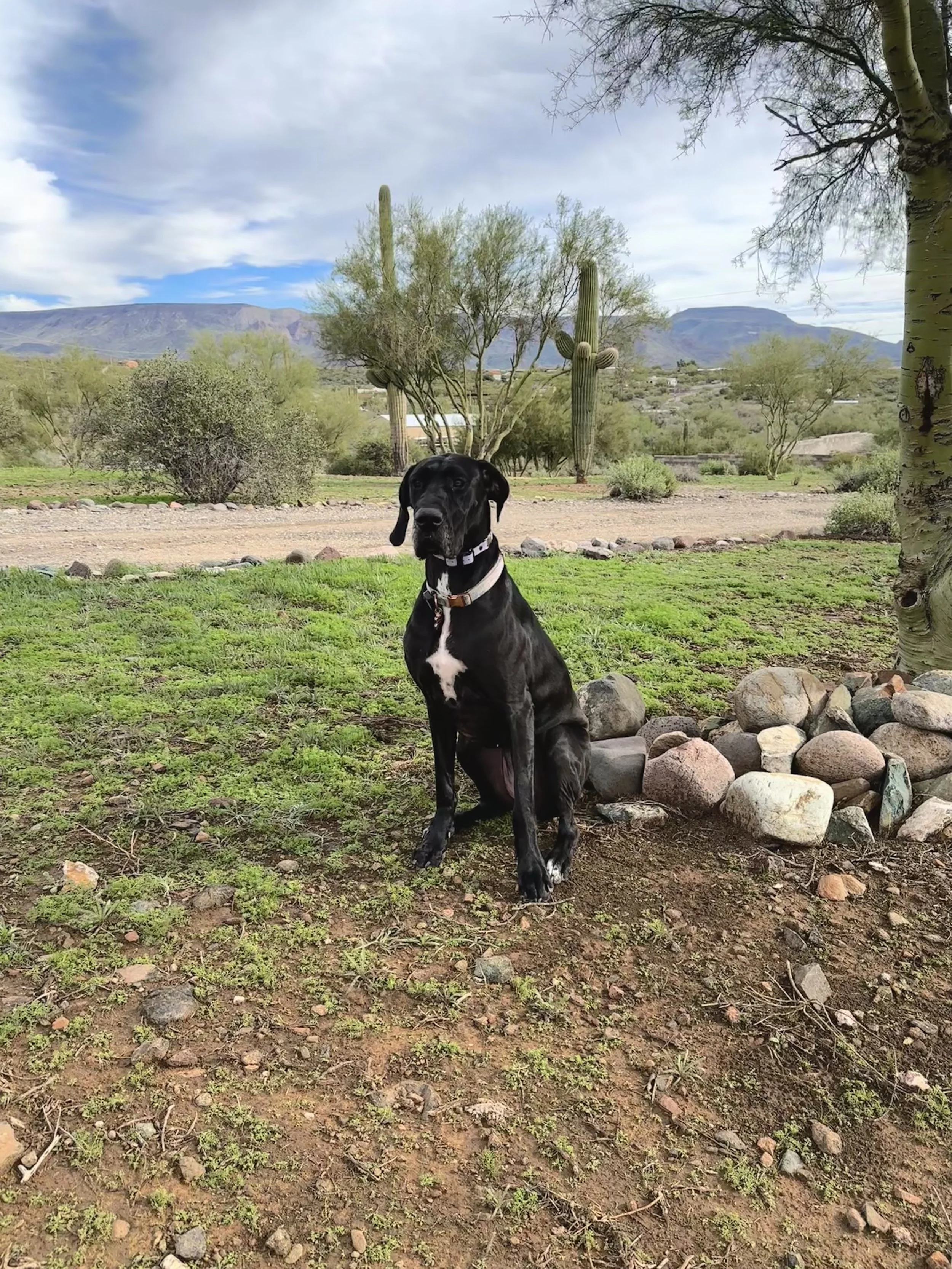
LIBERTY AT INSIDE OUT
At Inside Out, animal-assisted therapy is offered through Liberty, a Great Dane service dog in training who works alongside Christina Behrens, LPC. Liberty is present during Christina's sessions and available by request. She is trained to detect physiological distress and respond with grounding physical presence.
Meet Liberty | Meet Christina
What to expect
Liberty is available during sessions with Christina Behrens, LPC. If you would like her present in your session, simply mention it when you reach out or at the start of your appointment. There is no formal request process.
Clients who prefer sessions without Liberty are always welcome to say so. Her presence is optional and never assumed.
A note on allergies and dog sensitivity
If you have a dog allergy, a significant fear of dogs, or simply prefer not to have an animal present, please let us know. Liberty will not be in the room, and this does not affect your access to any other aspect of care at Inside Out.
If you have questions about what her presence actually looks like in the session environment, we are happy to answer them before you arrive.
Ready to experience it for yourself?
Animal-assisted therapy is available during in-person sessions with Christina Behrens, LPC in Peoria, Arizona. If you would like Liberty present in your session, simply mention it when you reach out. If you are not sure whether this approach is right for you, we are happy to talk through it before you book.
Common questions about animal-assisted therapy
-
These terms are often used interchangeably but they are not the same thing. An emotional support animal provides comfort through companionship and does not require specific task training. A therapy animal visits hospitals, schools, or other settings informally. A service dog is trained to perform specific tasks in response to a handler's needs, and in clinical settings, can be trained to respond to physiological cues from clients. Liberty is a service dog in training, which places her in a different category from ESAs and informal therapy animals. The AVMA's definitions provide a clear breakdown of the distinctions.
-
No. Liberty's presence in a session is always optional, and if she is in the room, you are never required to engage with her directly. She follows her own instincts about when and how to approach. Many clients find that she approaches them without any invitation on their part, which is part of what makes the experience clinically meaningful. But you are never obligated to do anything.
-
No. Animal-assisted therapy at Inside Out is offered through sessions with Christina Behrens, LPC, who Liberty accompanies when she is in the office. If you are working with another clinician at Inside Out, Liberty will not be part of those sessions.
-
The two approaches integrate naturally. Liberty's presence supports nervous system regulation, which is a prerequisite for effective EMDR processing. During preparation and stabilization phases, having Liberty in the room can help clients reach and maintain the regulated state the work requires. Her responses to physiological distress during processing can also serve as an in-session grounding resource that does not interrupt the bilateral stimulation.
-
Liberty is a Great Dane, which is a substantial presence in a room. If you have any concerns about being around a large dog, please tell us before your session. We can answer specific questions about what her behavior in the office looks like, or simply arrange for her not to be there. Your comfort is the priority.
Also explore:
-
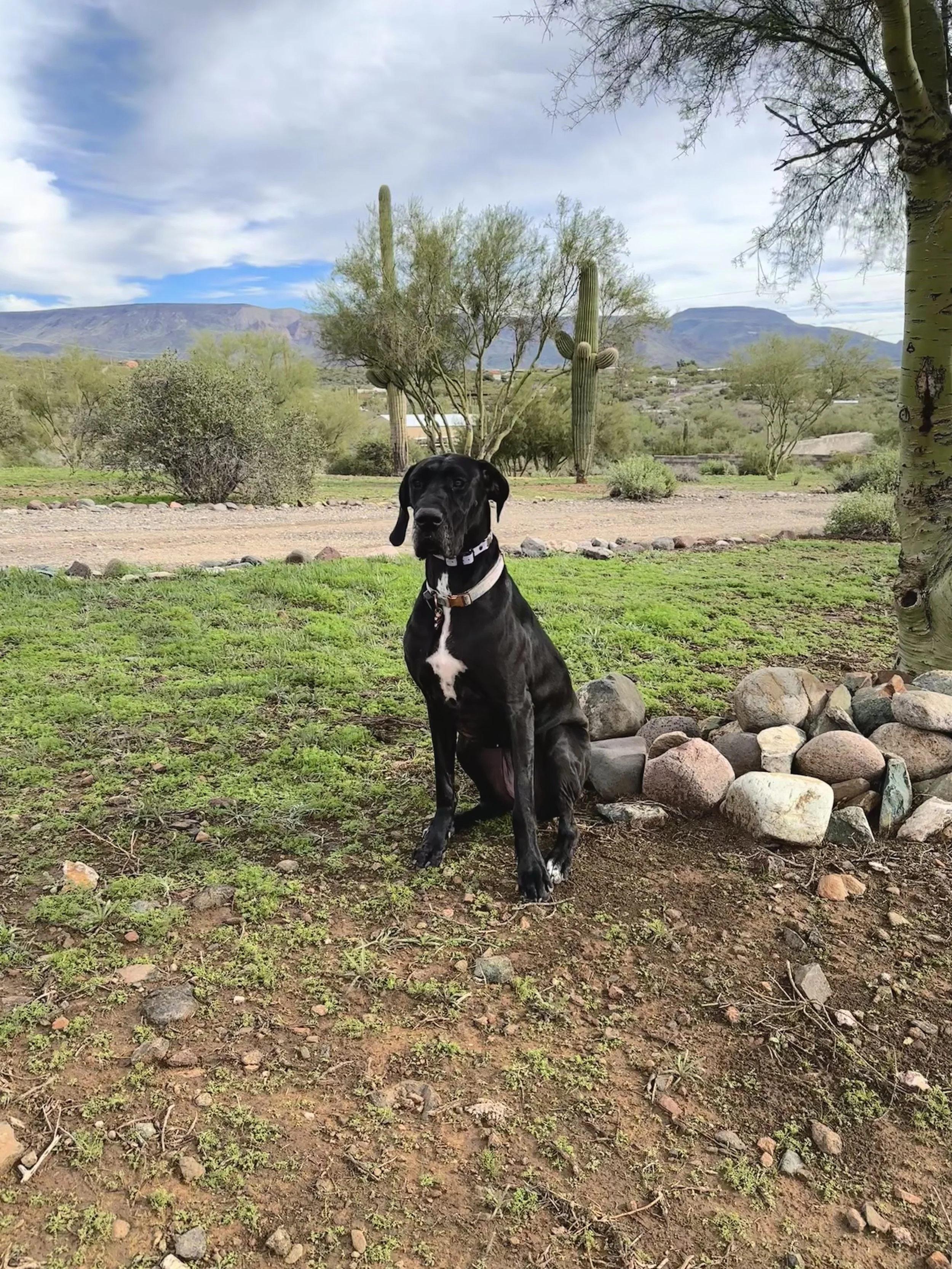
Meet Liberty
Animal-assisted therapy at Inside Out happens through Liberty, a Great Dane service dog in training who detects physiological distress and responds before you have had to say a word. The research explains what animal-assisted therapy is. Liberty is what it actually looks like.
-

Meet Christina
Liberty works alongside Christina Behrens, LPC, who brings advanced EMDR training and years of trauma-informed clinical work to every session. Understanding who Liberty works with tells you a lot about how the work is held.
-

EMDR therapy
Animal-assisted therapy and EMDR are the two modalities at Inside Out that work directly at the nervous system level rather than through conversation alone. For many clients, they are more powerful together. If one resonates, the other is worth understanding.