
When your child won't talk about what's bothering them
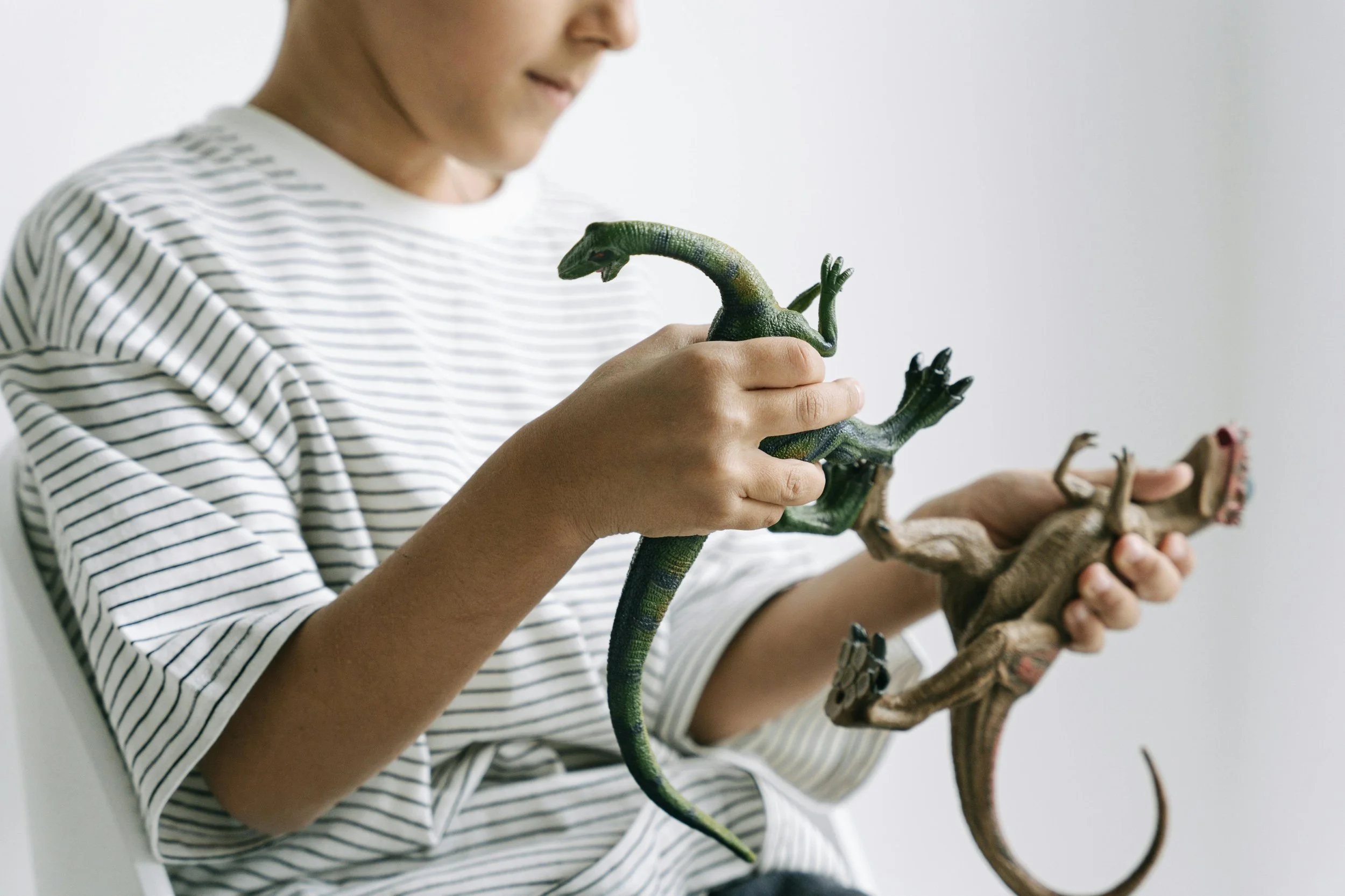
Your child has clearly been through something, or is clearly struggling with something. You can see it in the way they move through the world. The irritability that appeared after the school change. The sleep that has gotten worse since the divorce. The quietness that settled in after the thing they will not name.
And when you ask about it, you get a shrug. A one-word answer. Or you get the wall that goes up and stays up, and you are left standing on the other side of it not knowing what to do with what you can see.
This is not defiance. It is not manipulation. It is a child communicating in the only language they currently have available to them. And it is pointing toward a kind of help that looks different from what most parents expect.
Why children do not talk about hard things
Adults process experience primarily through language. We reflect, we narrate, we talk things through. It feels natural to assume that children do the same thing and are simply choosing not to.
But the capacity for emotional language, for putting internal experience into words, is a developmental achievement that takes years to build. Developmental research confirms that young children lack the neurological and cognitive architecture to observe, name, and report on their own emotional states, and that this capacity builds gradually and unevenly well into adolescence.
Young children often do not have the vocabulary for what they are experiencing. They do not have the cognitive architecture to observe their own emotional states, name them, and report on them to another person. This is not a failure. It is simply where they are developmentally.
Even older children who do have language available may not be able to access it when they are in distress. The same nervous system activation that makes it hard for adults to think clearly when they are overwhelmed applies to children, often more acutely, because the regulatory systems are still developing.
Asking a child to talk about a hard thing in the moment they are most activated by it is a little like asking someone to describe a car accident while it is happening. The words are not the right tool for the job.
When a child cannot find words for what they are carrying, they are not being difficult. They are showing you exactly where the work needs to happen.
What play therapy actually is
Play therapy is not a reward for going to therapy. It is not free time in a room with toys. It is a clinically structured approach to working with children that meets them in the language they already speak: play, movement, and creative expression.
Children communicate through play naturally and constantly. Foundational research in play therapy, summarized across decades of clinical literature, establishes that play is the primary language through which children make sense of experience, process difficult events, and rehearse ways of being in relationship.
Watch a child play for any length of time and you will see them working through fears, testing outcomes, rehearsing relationships, and processing experiences they have not yet been able to name. Play therapy uses that natural capacity deliberately, in a therapeutic context, with a trained clinician who knows how to observe, reflect, and facilitate the process.
Play therapy creates a space where children can express and process their inner world without needing words. The therapist does not interpret the play for the child or push for verbal reflection. They follow the child's lead, create safety, and trust the process.
What comes out is often more clinically meaningful than anything that would have emerged from a direct conversation. And it does not require the child to do anything that feels forced or confronting.
What sand tray therapy adds
Sand tray is one of the modalities used alongside play therapy, particularly for experiences that are hard to approach directly. A tray of sand, a collection of small figures, and an invitation to build whatever comes to mind.
What children create in the sand tray consistently reflects their inner world in ways that surprise even parents who know them well. The figures they choose, the scenes they construct, the stories they tell about what they have built, carry information that words alone rarely access.
For children who have experienced trauma, sand tray creates a layer of safety that makes the work possible. The experience is externalized, placed into the tray, made into something that can be looked at and worked with rather than something that lives only inside and has to be spoken about directly.
It works for adults too, for exactly the same reason.
What parents can do in the meantime
The most important thing is to resist the pressure to fix the silence. Asking the same question in different ways, reassuring the child that they can tell you anything, or expressing worry about their closed-off behavior all communicate, however unintentionally, that the silence is a problem that needs to be solved.
The silence is information. It does not need to be solved. It needs to be met with enough steadiness and patience that the child begins to believe that the relationship can hold whatever is happening inside them, even if they never put it into words.
That steadiness is harder than it sounds, especially for parents who are worried. Working with a therapist alongside your child, not necessarily in the same sessions, but in parallel, is one of the most effective things parents can do. Understanding what is happening in your child's nervous system, and what is happening in your own in response, changes the dynamic in ways that nothing else quite replicates.
If your child is struggling and words are not the way in, we work with children as young as five using play therapy, sand tray, and EMDR. You do not have to figure out the right approach alone.