

Sand Tray Therapy in Peoria, AZ
In-Person EMDR Therapy · Adults, Teens & Children (5+) ·
Some things do not have words yet.
Not because the experience was not significant, but because it happened before language was available to hold it, or because what is being carried lives in the body rather than the mind, and asking it to translate itself into a conversation feels like asking someone to describe a color they have never seen.
Sand tray therapy starts somewhere else. A tray of sand. A collection of small figures. An invitation to build whatever comes, without explanation, without narration, without having to know in advance what it means.
What emerges tends to say more than the words would have.
What sand tray therapy is
Sand tray therapy is an expressive, non-verbal therapeutic modality developed by Dora Kalff in the 1950s, building on the work of Carl Jung and Margaret Lowenfeld. It provides a structured space to externalize inner experience through symbolic arrangement.
A sand tray session involves a shallow tray of sand and a collection of miniature figures. The client arranges figures without direction, creating a scene that reflects something from their internal world. The therapist witnesses the process without interpreting or directing it.
The healing is not in the analysis of the scene. It is in the act of creating it.
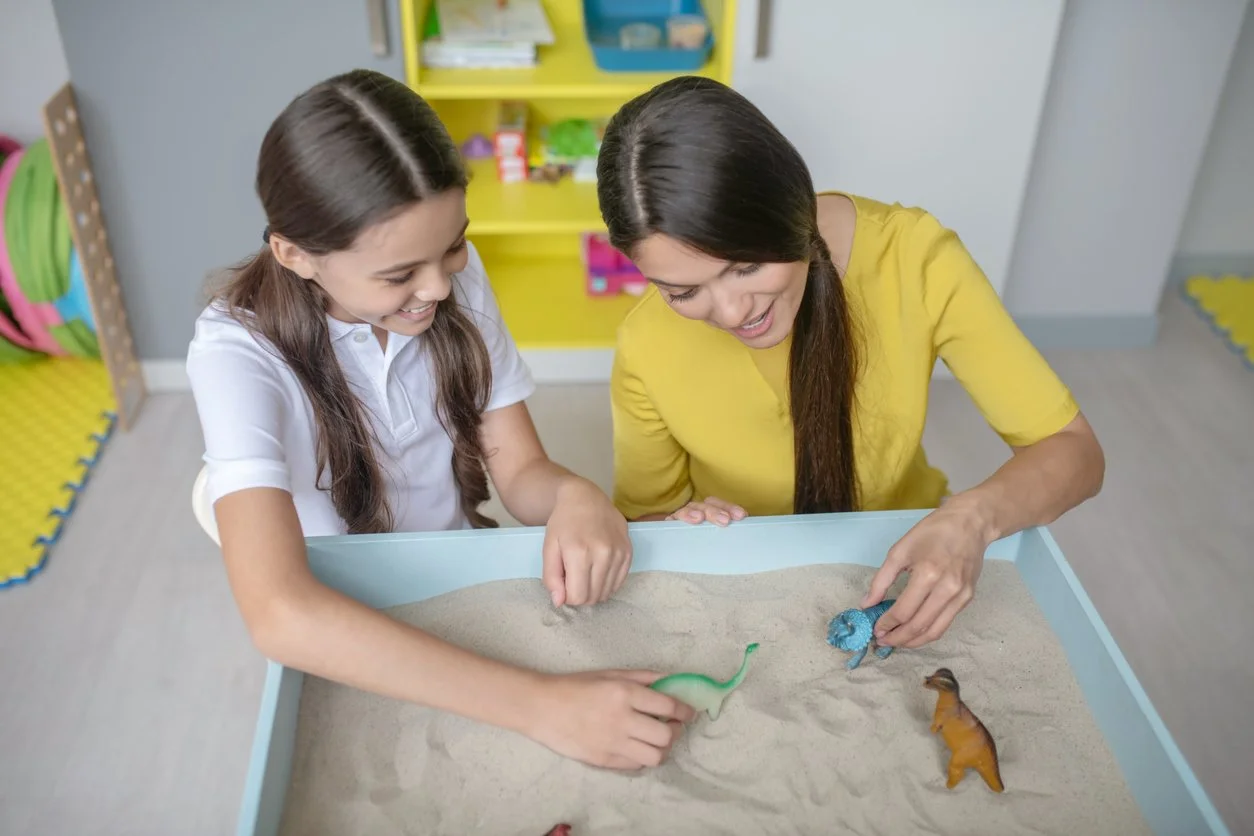
"The sand tray gives the client the possibility to arrange figures, create a world of their own, and say what they could not say in words."
Dora Kalff, founder of Sandplay Therapy
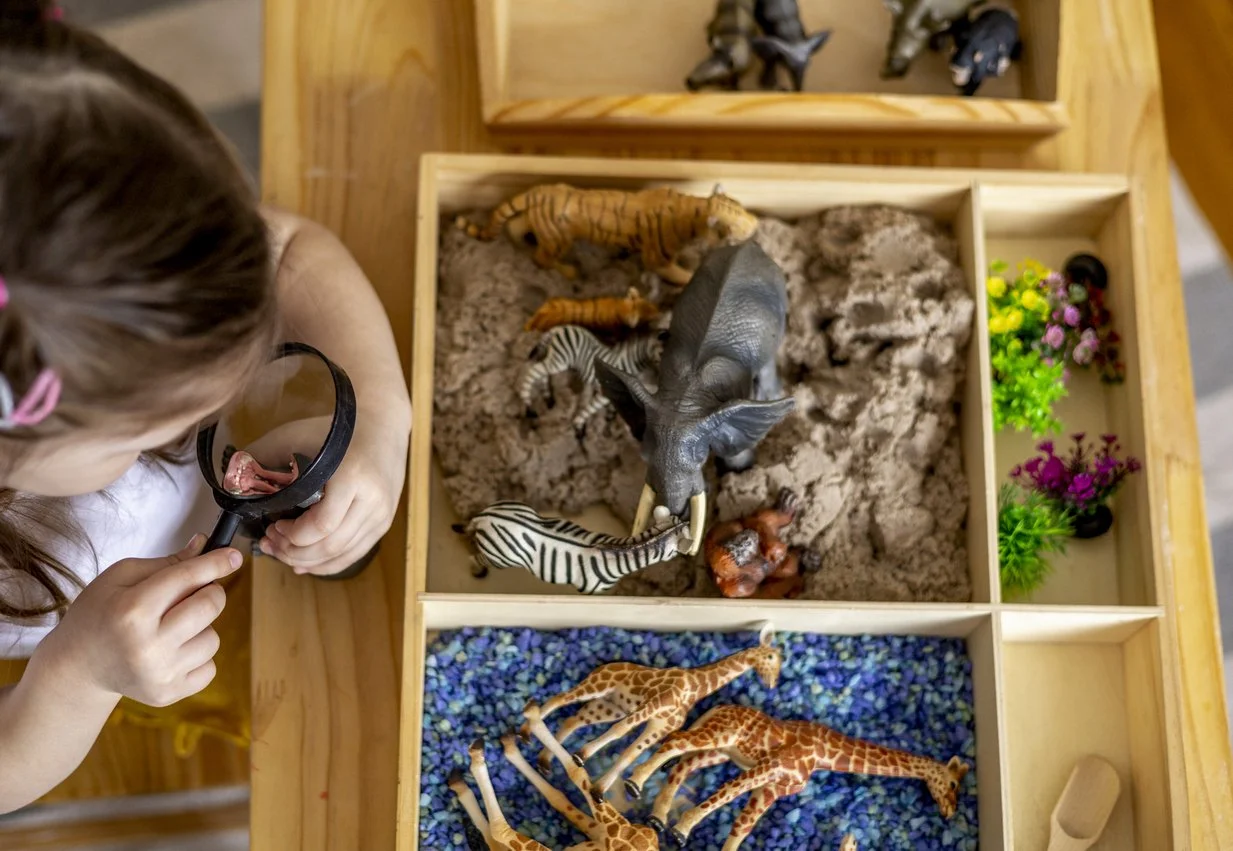
Why non-verbal processing matters
Trauma, grief, and deep emotional material are often stored in the nervous system before they are stored in language. This is why understanding an experience does not always change how it feels in the body.
Sand tray bypasses the translation requirement entirely. It allows the client to work with material directly, in symbolic form, without needing to articulate it first. This is why it integrates so effectively with EMDR, which also works at the level of the nervous system.
Who sand tray therapy helps
Sand tray is not only for children. It is effective across the lifespan for anyone whose experience is not fully accessible through conversation alone.
Children not yet ready for verbal therapy, or who express themselves more naturally through play
Adults carrying early or pre-verbal trauma that did not form into narrative memory
Anyone who has tried talk therapy and found that understanding does not shift how it feels in the body
Clients navigating grief and loss, particularly losses that are difficult to put into words
Adults and children processing significant life transitions or family changes
Clients with anxiety whose nervous system activation makes sustained verbal processing difficult
Anyone who finds that putting things into words feels like a performance rather than a release
What a sand tray session actually looks like
A first session begins with orientation. The therapist introduces the tray and figures. There is no script. The client is invited to use the figures however feels right, without direction.
Some clients know immediately what they want to create. Others sit with the tray before anything emerges. Both are fine. The therapist is present and witnessing, not directing or interpreting in real time.
Sessions can stand alone or be woven into ongoing therapy. For clients also doing EMDR, sand tray often serves as stabilization before or after processing.
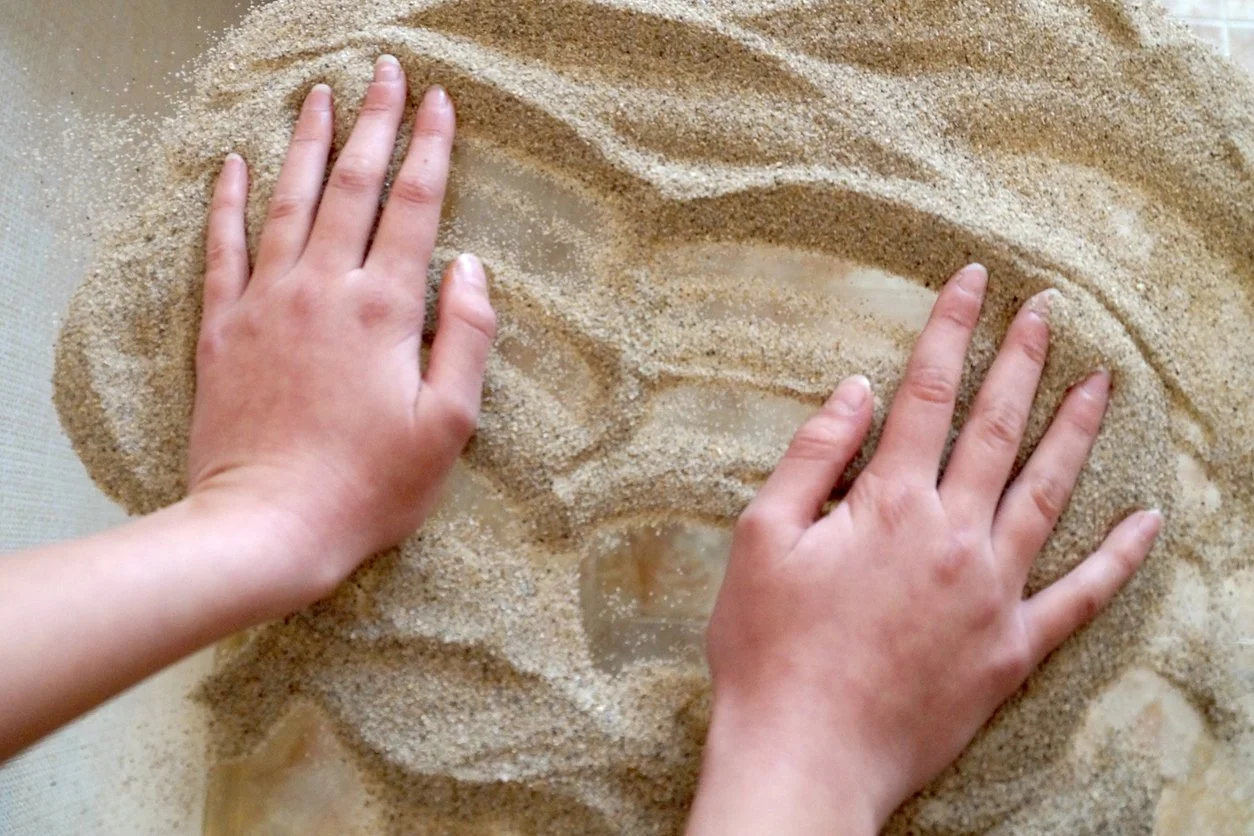
Sand tray therapy at Inside Out
Sand tray at Inside Out is offered as part of an integrated approach to trauma-informed care. It is available for children as young as five and for adults. It integrates naturally with EMDR, animal-assisted therapy with Liberty, and the full range of trauma-informed work happening at the practice.
To find the right clinician, visit the team page. When you reach out, we will help you find the right fit.
Sand Tray Therapy in Peoria, AZ
You do not have to find the words first.
Sand tray therapy starts where you are. In-person sessions in Peoria, AZ. Available for children and adults.
Common Questions About Sand Tray Therapy
-
A first sand tray session begins with orientation. Your therapist will introduce the tray, show you the collection of figures available, and explain the basic structure of the work. From there, you are invited to use the figures however feels right — there is no correct approach, no scene you are supposed to create, and no requirement to explain what you are making. Some people know immediately what they want to build. Others sit with the tray for a while before anything emerges. Both are completely normal. Your therapist is present and witnessing throughout, not directing or interpreting in real time. Most people leave their first sand tray session surprised by what came up and by how different it felt from talking.
-
Yes. Sand tray and sandplay therapy have a substantial clinical literature supporting their effectiveness, particularly for trauma, grief, anxiety, and work with children who are not yet developmentally ready for verbal processing. The Association for Play Therapy recognizes sand tray as one of the most clinically effective expressive modalities available. Research consistently shows that non-verbal, body-based approaches are especially effective for trauma stored before language was available to hold it.
-
Yes, and in some cases it reaches trauma that talk therapy and even EMDR alone cannot fully access. Trauma is often stored in the nervous system before it is stored in language, particularly early childhood trauma or experiences that were so overwhelming they did not form into coherent narrative memory. Sand tray allows the client to engage with that material symbolically and externally without requiring verbal narration. At Inside Out, sand tray is frequently integrated with EMDR as part of a trauma-informed treatment plan, supporting stabilization and resourcing during phases of the protocol where the nervous system needs grounding before processing begins.
-
Both. Sand tray is particularly well-known as a children's therapy modality because children communicate naturally through play and often lack the developmental capacity for verbal processing. But some of the most significant sand tray work happens with adults, particularly those carrying pre-verbal trauma, grief without language, or experience that has been resistant to talk-based approaches. Adults who approach the tray expecting it to feel childish often find that something unexpected and meaningful emerges precisely because the usual defenses around verbal performance are not engaged.
-
Sand tray tends to be a strong fit if any of these feel familiar: you have tried talk therapy and understood your patterns but could not shift them. You carry something that feels too large or layered to approach through conversation. You find that putting your experience into words feels like a performance rather than a release. Your experience happened early enough that it does not have a clear narrative attached to it. You are a parent whose child is struggling but cannot tell you why. Sand tray does not require you to know in advance whether it is right for you. A consultation is a low-pressure way to find out whether it fits what you are dealing with.
Also explore:
-

Meet the team
Sand tray therapy is only as effective as the clinician holding the space. Before you book, get a sense of who you would be working with: their training, their approach, and whether the fit feels right.
-

EMDR therapy
Sand tray and EMDR are the two modalities at Inside Out that work at the level of the nervous system rather than through conversation alone. For many clients, they are more powerful together than either is on its own.
-

Children's therapy
If you found this page because of a child in your life, sand tray is one of the most effective tools we have for younger nervous systems. But the full picture of how we work with children goes deeper than one modality.